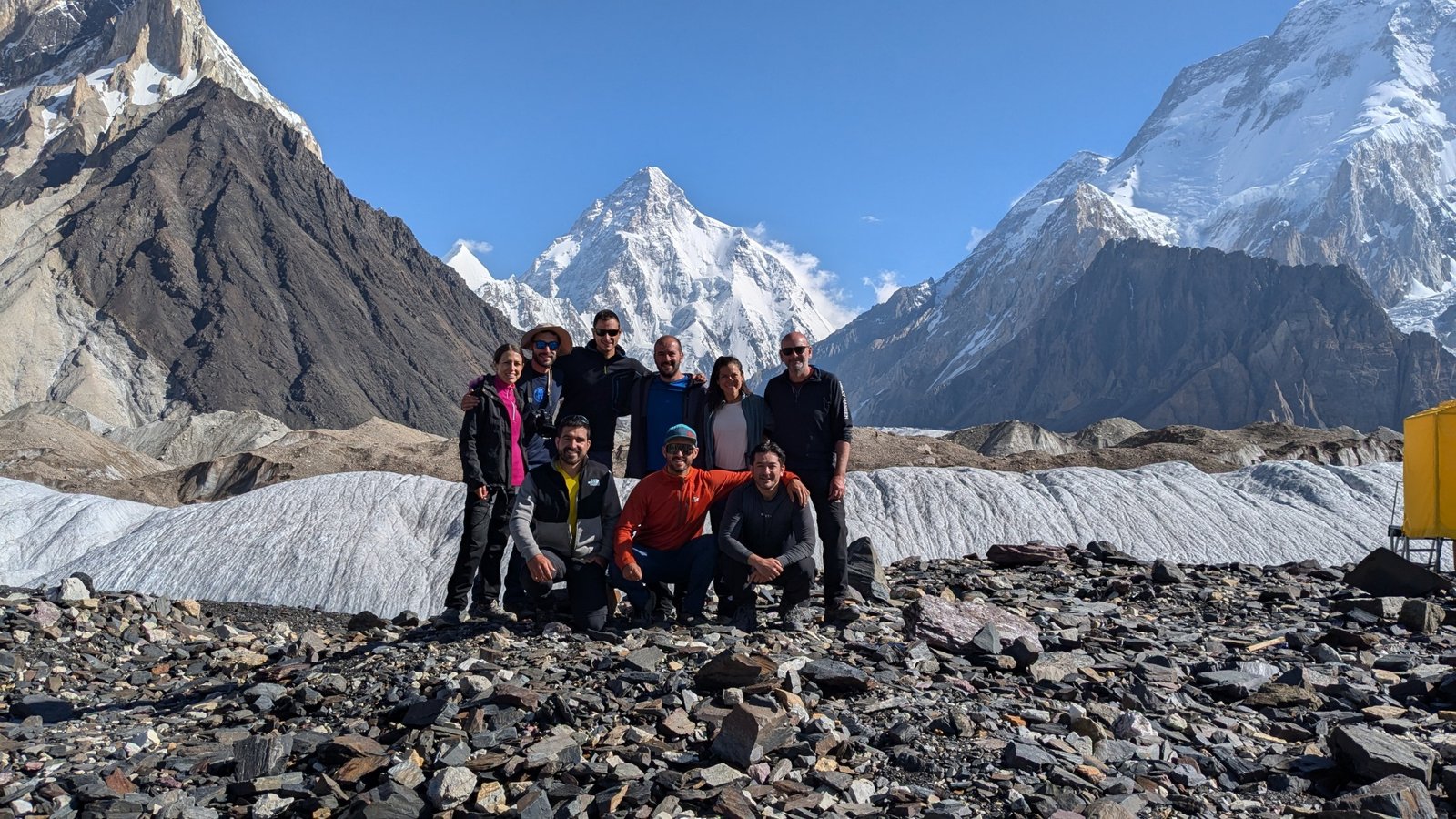
Most people who dream of seeing K2 picture a single dramatic moment: the second-highest mountain on Earth rising out of the ice, with nothing between you and it. What they often do not picture is everything that comes before it: two weeks of walking on moving rubble, nights in a tent at 4,000 metres, and a landscape with no lodges, no villages and no shops.
That is exactly why the K2 Base Camp Trek is one of the great journeys of the mountain world. It is hard, remote and wild. It is also, for a reasonably fit and well-prepared walker, completely doable, and it does not need any climbing skill. This guide covers what you actually need to know before you book: the route, the real distances and altitudes, how hard it is, when to go, the visa and permit process, what it costs, what to pack, and the mistakes that trip people up. We are Snowcap Adventures, a local Pakistani trekking company, so we have also been honest about where the details vary between operators.
Quick facts
| where | Karakoram range, Gilgit-Baltistan Pakistan |
| Also called | Baltoro Glacier Trek, Baltoro Concordia Trek |
| Starting point | Askole village (or Jhola camp, depending on the road) |
| Highest point | K2 Base Camp, roughly 5,000 to 5,150 m (sources differ) |
| Concordia | About 4,500 to 4,700 m (sources differ) |
| Trekking days | About 13 to 14 days on the trail |
| Total trip | About 20 to 21 days, Islamabad to Islamabad |
| Season | Late June to early September |
| Difficulty | Hard, but non-technical |
| Style | Fully supported camping, no tea houses |
| Typical price with a local operator | Roughly $1,800 to $2,300 [update with current market] |
What is the K2 Base Camp Trek?
The trek follows the Baltoro Glacier, a river of ice that runs about 63 km through the heart of the Karakoram, up to a place called Concordia. From there you turn onto the Godwin Austen Glacier and walk to the foot of K2 itself.
A quick note on the words. Base Camp here is the camp mountaineers use when they attempt K2, and trekkers walk to the same spot. It is a working climbers’ camp, so you may meet expedition teams there during the summer.
Along the way you pass some of the most famous mountains in the world. You walk beneath the Trango Towers, Cathedral Peaks and Uli Biaho in the first half, see Masherbrum and Gasherbrum IV in the middle, and arrive at Concordia surrounded by four peaks above 8,000 m: K2, Broad Peak, Gasherbrum I and Gasherbrum II. Many trekkers say Concordia is the single best campsite they have ever slept at.
How do you get there?
Every trek starts in Islamabad. From there:
1. Fly Islamabad to Skardu (about 45 to 60 minutes). On a clear day the flight passes Nanga Parbat. Flights depend on weather, which is why every sensible itinerary includes spare days.
2. Rest and prepare in Skardu (one or two days). Permits are finalised, gear is checked and you start adjusting to altitude. Skardu sits at roughly 2,200 to 2,500 m.
3. Drive to Askole (around 7 to 8 hours by 4x4). The road follows the Shigar Valley and then the Braldu Gorge. In recent years the track has been extended further to Jhola camp, so some groups now start walking there when conditions allow.
If the Skardu flight is cancelled, the backup is the Karakoram Highway by road, which adds a long day or two but is also a very scenic journey.
The route, day by day:
Exact camps and timings vary between operators and with conditions, but the classic out and-back route looks like this. This matches our 21-day itinerary.
| Day | Plan | Approx. altitude |
| 01 | Arrive in Islamabad, trek briefing | 540 m |
| 02 | Fly to Skardu | 2,250 m |
| 03 | Rest, permits and gear check in Skardu | 2,250 m |
| 04 | Drive to Askole | 3,000 m |
| 05 | Trek to Jhola | 3,100 m |
| 06 | Jhola to Paiju | 3,400 m |
| 07 | Rest and acclimatise at Paiju | 3,400 m |
| 08 | Paiju to Khoburtse (first day on the Baltoro) | 3,800 m |
| 09 | Khoburtse to Urdukas | 3,900 m |
| 10 | Urdukas to Goro II | 4,300 m |
| 11 | Goro II to Concordia | 4,500 to 4,700 m |
| 12 | Concordia to K2 Base Camp, with Broad Peak Base Camp and the Gilkey Memorial | 4,800 to 5,150 m |
| 13 | Return toward Concordia | 4,500 to 4,700 m |
| 14 | Concordia to Goro I | 4,100 m |
| 15 | Goro I to Khoburtse | 3,800 m |
| 16 | Khoburtse to Jhola | 3,100 m |
| 17 | Jhola to Askoli | 3,000 m |
| 18 | Drive to Skardu | 2,250 m |
| 19 | Fly back to Islamabad | 540 m |
| 20 | Contingency day | 540 m |
| 21 | Fly to Home Country | nill |
What the days feel like
Askole to Paiju (days 5 to 6).
These days are hot, dry and dusty. You walk through the last green fields, cross streams on the Braldu River and get your first views of the Trango Towers. There is almost no shade, so sun protection matters more than people expect.
Paiju to Urdukas (days 8 to 9)
You step onto the Baltoro Glacier. It is not smooth ice. The surface is rock, gravel and boulders sitting on ice, and the path rises and falls constantly. Walking here is slower and more tiring than the distance suggests. Urdukas is a grassy terrace above the glacier, used as a campsite since an expedition led by the Duke of Abruzzi in 1909. Goro II to Concordia (days 10 to 11)
The air gets noticeably colder and thinner. K2 stays hidden until the very last stretch, and then appears at the head of the glacier. This is the moment most people remember.
K2 Base Camp day (day 12)
It is a long day. From Concordia it is roughly 9 to 12 hours there and back, or shorter if you sleep at Broad Peak Base Camp first. You walk on moraine and patches of ice, past Broad Peak Base Camp, and finish at the climbers’ camp at the foot of K2. The Gilkey Memorial, which honours climbers who died on K2, is close by.
How far is the K2 Base Camp Trek, and how high does it go?
It depends who you ask, and the figures online do not agree. GPS tracks and operator estimates give roughly 75 to 90 km each way from the trailhead, and somewhere between 150 and 180 km for the round trip, depending on where you start and which route you take. Daily walking distances run from about 6 km on the shortest day to over 20 km on the longest. Altitude figures also vary by source, which is normal because camps shift as the glacier moves. Use these as planning numbers:
1: Askole: about 3,000 m
2: Paiju: about 3,400 m
3: Urdukas: about 3,900 to 4,100 m
4: Concordia: about 4,500 to 4,700 m
5: K2 Base Camp: about 5,000 to 5,150 m
What matters more than the exact figure is the pattern. You spend roughly a week above 3,500 m and several nights above 4,000 m, so acclimatisation days are not optional extras.
How hard is the K2 Base Camp Trek?
It is a demanding trek, but it is not a climb. You do not need ropes, an ice axe or technical skills. Some operators suggest micro-spikes for icy patches, so ask yours. The difficulty comes from four things together:
1: Length. About two weeks of consecutive trekking days.
2: Terrain. Loose rock and ice for long stretches, which is hard on ankles and knees.
3: Altitude. Sleeping above 4,000 m for several nights.
4: Remoteness. There is no lodge to retreat to. Camps are set up and taken down every day
You will usually walk 5 to 8 hours a day, with a few longer days. Porters carry your main bag. You carry a day pack with water, layers, sunscreen, snacks and a camera. If you have already done a multi-day trek at altitude, you are in a good position. If your longest walk so far is a weekend hike, build up before you book. We also run a slower 25 day K2 Base Camp Trek for Beginners for walkers who want more rest days.
How to train
Start about three months before departure. You do not need to be an athlete, but you do need stamina, strong legs and a body used to long days.
Walk with a loaded pack
Work up to 10 to 15 kg for several hours at a time, on hills if you can.
Build endurance
Cycling, running, swimming or stair climbing three or four times a week.
Strengthen legs and core
Squats, lunges and step-ups. Uneven glacier ground rewards stable ankles and a strong core.
Practise in your boots
Break in your boots long before you arrive, and walk in them for hours.
Taper
Ease off in the last week so you arrive rested.
If you can get any time at altitude before the trip, it helps, but it is a bonus, not a requirement
When is the best time to go?
The trekking season runs from late June to early September. July and August bring the most stable weather and the clearest skies. The Karakoram does not get a monsoon the way the Himalaya does, which is one reason summer works so well here.
Late June: More snow lingers on the higher sections and cooler conditions are common. Fewer people.
July to mid August: The most reliable weather and the busiest period, with the biggest choice of departures.
Late August to early September: Settled and often beautiful, but nights get colder and snow is possible.
Weather can change quickly at any time. It is normal to feel strong sun at lower camps and freezing temperatures at night around Concordia, sometimes within the same trip.
Permits and visas
This is the part that surprises first-time visitors. The Baltoro region lies inside the Central Karakoram National Park, close to the borders with India and China, so it is a restricted area. Three things follow from that.
1. You need a guide. Trekking in this area without a licensed Pakistani guide and registered operator is not allowed, for foreigners and Pakistanis alike. Your operator arranges the guide and the paperwork.
2. You need the right visa. Operators and agencies currently advise that trekkers apply for the Mountaineering and Trekking visa through Pakistan’s official online visa portal, rather than a standard tourist visa. We sends the invitation letter and supporting documents. Processing times are reported at roughly 4 to 8 weeks, so apply as soon as you have booked. Rules change, so confirm the latest requirements for your nationality on the official site. https://visa.nadra.gov.pk/mountaineering-trekking/
3. You need to know what the fees cover. Some operators include permit and national park fees in the price. Others list them separately, which can add a few hundred dollars. Always ask before comparing prices. On our trek, NOC, permits and national park fees are included.
How much does the K2 Base Camp Trek cost?
Prices vary widely, and the cheapest quote is rarely the best value. As a rough guide in late 2026:
Local Pakistani operators. group departures cost about $1,800 to $2,300 included Camping, guides, porters, meals, CKNP wast managment fee, Permit fee, internal flights and transport.
Western-based operators. Roughly $4,000 and up, with some well above $7,000. Often the same on-the ground team, plus a Western leader and company margin.
Our 21-day all-inclusive departure starts from $1,800 per person.
What should the price include?
Airport transfers and hotels (twin share) in Islamabad and Skardu
Domestic flights
4x4 transport to Askole.
A licensed guide, cook, assistants and porters.
All meals, plus boiled water and snacks on the trek.
Tents (sleeping, dining and toilet), and the equipment the crew carries.
Permits, NOC and national park fees.
A satellite phone for emergencies.
Costs that are often not included
International flights
Travel insurance (essential, see below)
Visa fee
Personal gear and rental of sleeping bags or boots
Tips for guides, porters and staff
Extra hotel nights and drinks
What to pack
You will be given a full list when you book. These are the items that really matter.
Sleeping bag rated to around -12 °C or lower. Nights at Goro and Concordia can drop well below freezing.
Insulated down jacket plus a fleece or mid-layer
Waterproof jacket and trousers
Well broken-in boots with ankle support
Sleeping mat if your operator does not provide one
Thermal base layers, merino or synthetic. Avoid cotton.
Warm hat, sun hat, buff and gloves
Sunglasses with strong UV protection. Glare off the glacier is intense.
Sunscreen and lip balm
Headtorch with spare batteries
Trekking poles. Highly recommended on the glacier.
Sandals or old shoes for stream crossings and camp
Water bottles (1 litre or more) and a way to treat water
Personal first aid: blister care, painkillers, rehydration salts, stomach medication and any prescription items.
Power bank or small solar charger
Small padlock for your porter bag
Keep your trek bag within your operator’s weight limit, which is commonly about 12 to 18 kg including sleeping gear. The limit protects the porters, and it is enforced Anything you do not need can usually be left safely in Skardu.
Altitude sickness: take it seriously
Altitude is the main medical risk on this trek, and it can affect fit people as easily as anyone else.
How to reduce the risk:
Go slowly. The pace here should feel almost too easy.
Use the rest days. They are built in for a reason.
Drink plenty of water and eat even when your appetite drops.
Tell your guide early if you have a headache, nausea, unusual tiredness or poor sleep. Do not hide symptoms to avoid slowing the group.
Know the warning signs. Severe headache, confusion, loss of balance, breathlessness at rest, or a wet cough mean you must descend. Your guide makes that call.
Some trekkers talk to their doctor beforehand about altitude medication. That is a personal medical decision, so get advice from a doctor who knows your history.
Food, water, camps and comfort
Food. Expect three meals a day cooked by your trek cook: porridge, eggs, bread or chapati for breakfast, a packed or camp lunch, and a hot dinner with soup, rice, lentils, vegetables and meat or egg dishes. Appetite often drops at altitude, so a good cook makes a big difference. Tell your operator about vegetarian or other dietary needs in advance.
Water. Operators typically provide boiled water in camp. Water from streams and glacier melt can be silty or contaminated near campsites, so treat it (boil, filter or purify) rather than trusting it. Stomach bugs ruin treks.
Camps. You sleep in two-person tents, with a dining tent and a toilet tent set up by the crew. Several established camps have basic toilets, though quality varies. Wherever you are, carry out your own litter.
Power and signal. Your crew may carry a solar panel or generator for charging. Mobile coverage is almost non-existent for most of the route. Some operators report a mobile tower near Concordia that works with a local SIM, but do not count on it. Your guide carries a satellite phone for emergencies.
Porters, tipping and responsible trekking
The Balti porters and many of the cooks and guides come from the villages around Askole and the Shigar Valley. They carry heavy loads for weeks, and the trek would not exist without them.
1: Choose an operator that pays fairly and provides proper boots, clothing and insurance for porters. Ask directly.
2: Tipping is customary. Your guide will usually suggest a group amount and hand it over at the end.
3: Do not leave rubbish at camps. Carry out what you carry in.
4: Be respectful of local culture. The region is conservative, so dress modestly in towns and villages.
Insurance and rescue
Travel insurance is not a formality here. Buy a policy that covers trekking up to at least 5,500 m, medical costs and helicopter evacuation from high altitude. Tell the insurer your exact route. We recomend Global Rescue.
Helicopter rescue in Pakistan is limited and expensive, and one experienced guide has reported figures around $15,000 from K2 Base Camp. Operators often need to arrange payment with the rescue provider before a helicopter flies, so ask any company you consider how they handle evacuation and what happens in an emergency.
Classic route or Gondogoro La?
The classic route goes up the Baltoro and returns the same way. A popular extension continues from Concordia over the Gondogoro La pass (about 5,585 m) and down to the Hushe Valley, making a loop. It is more spectacular and more demanding. It needs extra gear, a very early start on pass day and good conditions. If you are curious, see our K2 Gondogoro La Trek.
Common mistakes to avoid
1. Booking the cheapest option without reading the exclusions. Permits, flights or porters left out can erase the saving.
2. Skimping on the sleeping bag. A warm bag matters more than almost any other piece of kit.
3. Not breaking in boots. Blisters on the glacier are miserable.
4. Underestimating the first days. Heat and dust at low altitude catch people out.
5. Applying late for the visa. Allow plenty of weeks. 6. Skipping insurance. It is the one thing you hope never to use.
7. Rushing. Trying to shorten the trek by skipping rest days raises your altitude risk.
8. Ignoring spare days. Weather in Skardu is unpredictable, so do not plan a tight connection home
Frequently asked questions
How long is the K2 Base Camp Trek? The trip takes about 20 to 21 days from Islamabad to Islamabad, with around 13 to 14 days of actual trekking.
Is the K2 Base Camp Trek dangerous? The route is non-technical and well established, and fatal accidents among trekkers are rare. The real risks are altitude, rockfall in the gorge, river crossings and changing weather. A good team, sensible pacing and decent insurance manage them well.
Can I do the K2 Base Camp Trek without a guide? No. A licensed guide and a registered operator are legally required in this restricted area.
Do I need previous trekking experience? Multi-day trekking experience is strongly recommended, but technical climbing experience is not needed.
How much does the K2 Base Camp Trek cost? With a local Pakistani operator, expect roughly $1,800 to $2,300 for a group departure, plus flights to Pakistan, insurance, visa, personal gear and tips. Our all-inclusive 21-day trek starts at $1,800
What is the best month for the K2 Base Camp Trek? July and early August are the most reliable. Late June to early September is the full season.
Is there mobile signal or Wi-Fi? Very little. Do not expect either along most of the route. Guides carry satellite phones.
Can solo travellers and women join? Yes. Solo trekkers usually share a tent with someone of the same gender. Snowcap offers a separate tent or room for solo women at no extra cost when no partner is available.
What happens if my flight to Skardu is cancelled? The usual backup is the Karakoram Highway by road. That is why the itinerary includes a buffer day, and why you should not book tight flights home.
How cold does it get? Below freezing at night at higher camps, with Concordia and Goro among the coldest. Pack a warm sleeping bag and several layers.
Can older trekkers do it? Age is less important than health, fitness and altitude experience. Many people in their fifties and sixties complete it. Talk to your doctor first.
Ready to start planning?
The K2 Base Camp Trek is not the easiest holiday you will ever take, but for many people it is the most memorable. You will walk beside glaciers older than any human memory, share camp with the porters who make it possible, and finally stand in front of a mountain that few people ever see up close.
If you would like help choosing dates, checking your fitness for the trek or understanding the visa process, we are happy to talk it through.
View our 21-day K2 Base Camp Trek
