Spantik Peak Expedition (7126m)
0/5
0% of guests recommend
Duration
28 Days
Tour Type
Climbing
Group Size
8 persons
Location
Gilgit Baltistan
Facilities
Wifi
Food
Satellite Phone
Transportation
Hotel Stays
Airport Pick & Drop
Guiding
Visa Processing
Overview
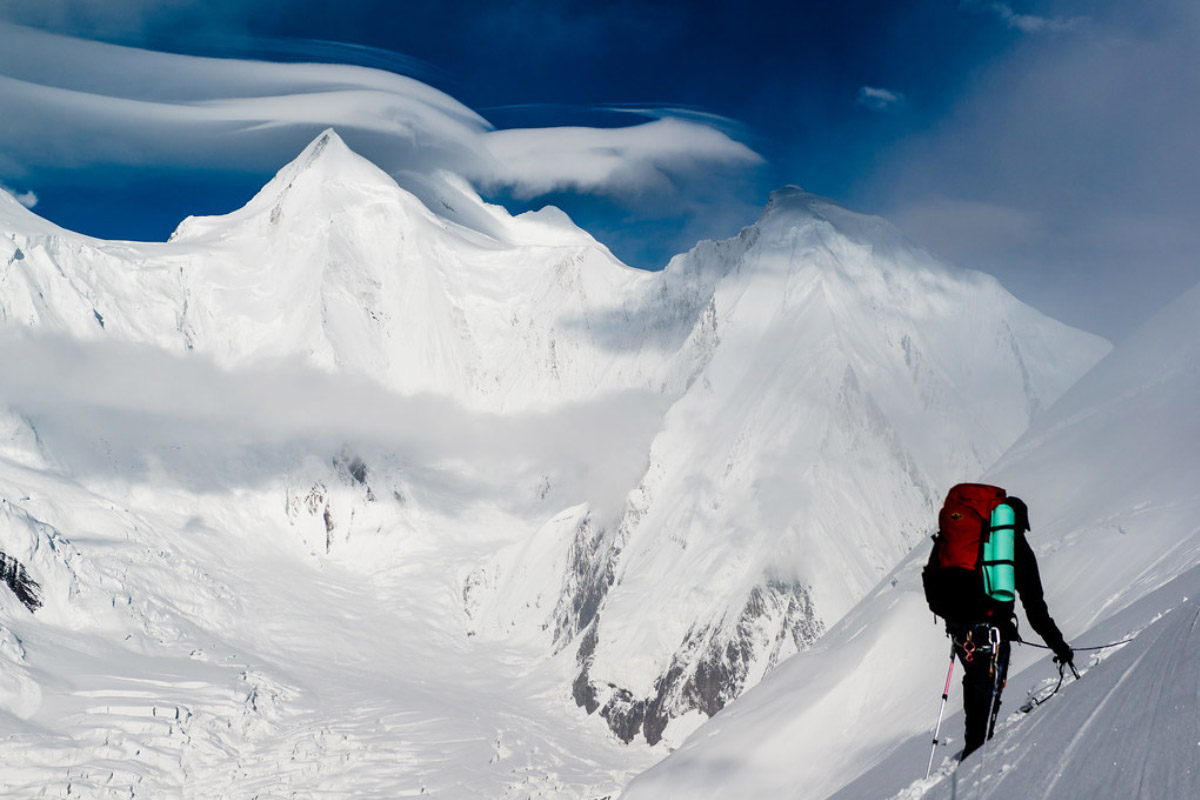
The Spantik Peak Expedition (7,027 m) offers one of the finest opportunities to climb above 7,000 meters in the majestic Karakoram Range under comparatively safe and manageable conditions. Known worldwide as an ideal training peak for 8000-meter expeditions, Spantik is a dream objective for mountaineers seeking high-altitude experience without extreme technical difficulty.
Spantik Peak rises in a remote corner of Gilgit-Baltistan, far from the crowded trekking corridors of the Karakoram. Its isolation enhances the wilderness experience, while its southeast ridge provides a logical, safe, and aesthetically rewarding climbing route. For climbers who have completed major treks or summited a 6,000-meter peak, Spantik is a natural next step toward bigger Himalayan and Karakoram objectives.
Why Climb Spantik Peak?
Spantik is often described as a “gateway to the 8000ers.” With a height of 7,027 meters, it allows climbers to experience extreme altitude, glacier travel, snow and ice climbing, and expedition-style logistics without the high risks associated with more technical 7,000-meter peaks.
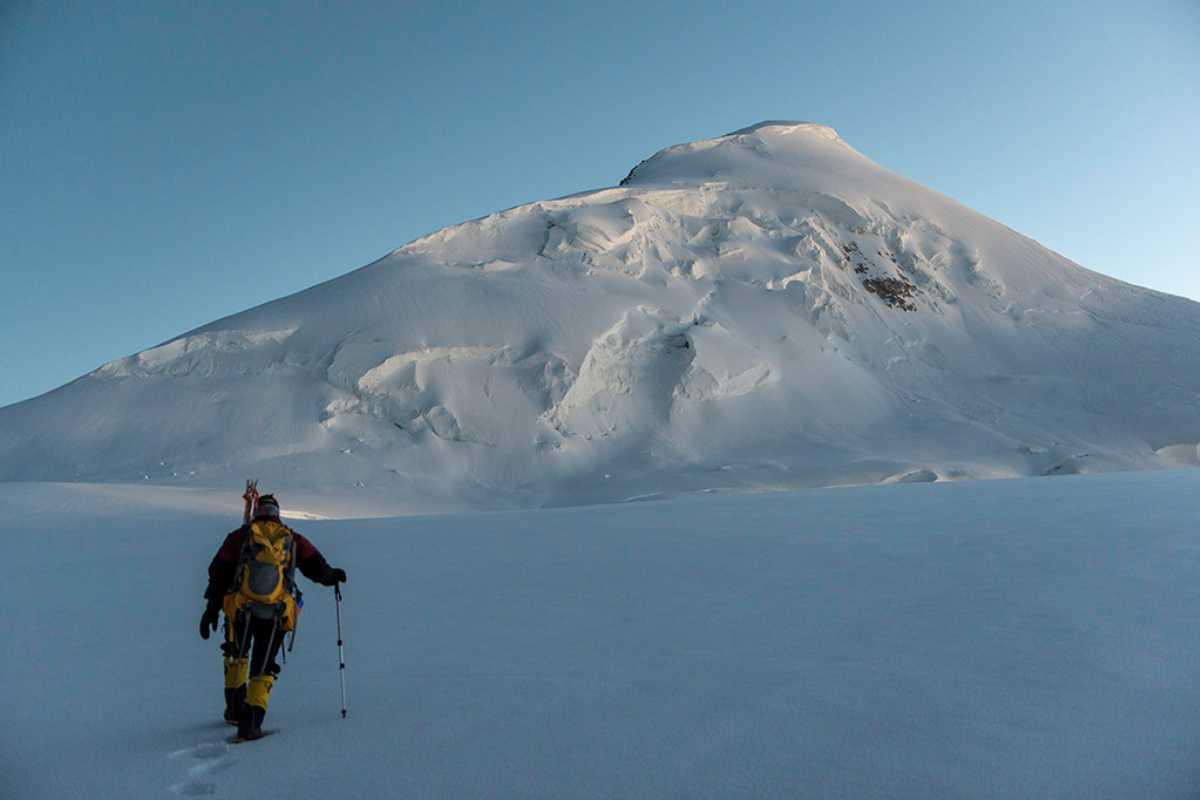
The mountain is classified as a Grade II snow and ice climb, making it one of the least technical peaks of its category in the Karakoram. The ascent is primarily on firm snow, with limited technical sections where fixed ropes are installed for added safety. This combination makes Spantik an excellent testing ground for endurance, acclimatization, and high-altitude performance.
Location and Approach
Spantik Peak is located south of the Hisper Glacier, overlooking the vast Chogolungma Glacier, on the border between Shigar Valley and Nagar Valley in Gilgit-Baltistan, Pakistan. The expedition begins with a scenic drive of approximately 6–7 hours from Skardu to Arando Village in Shigar Valley.
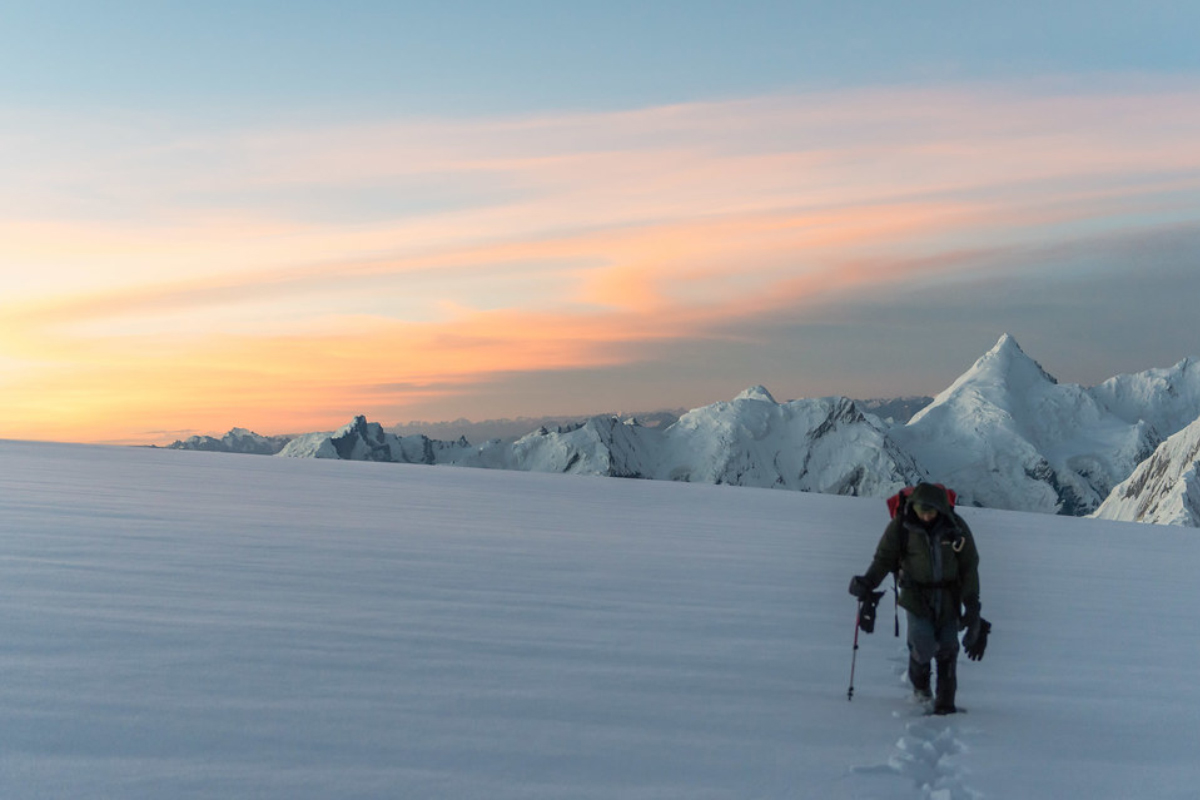
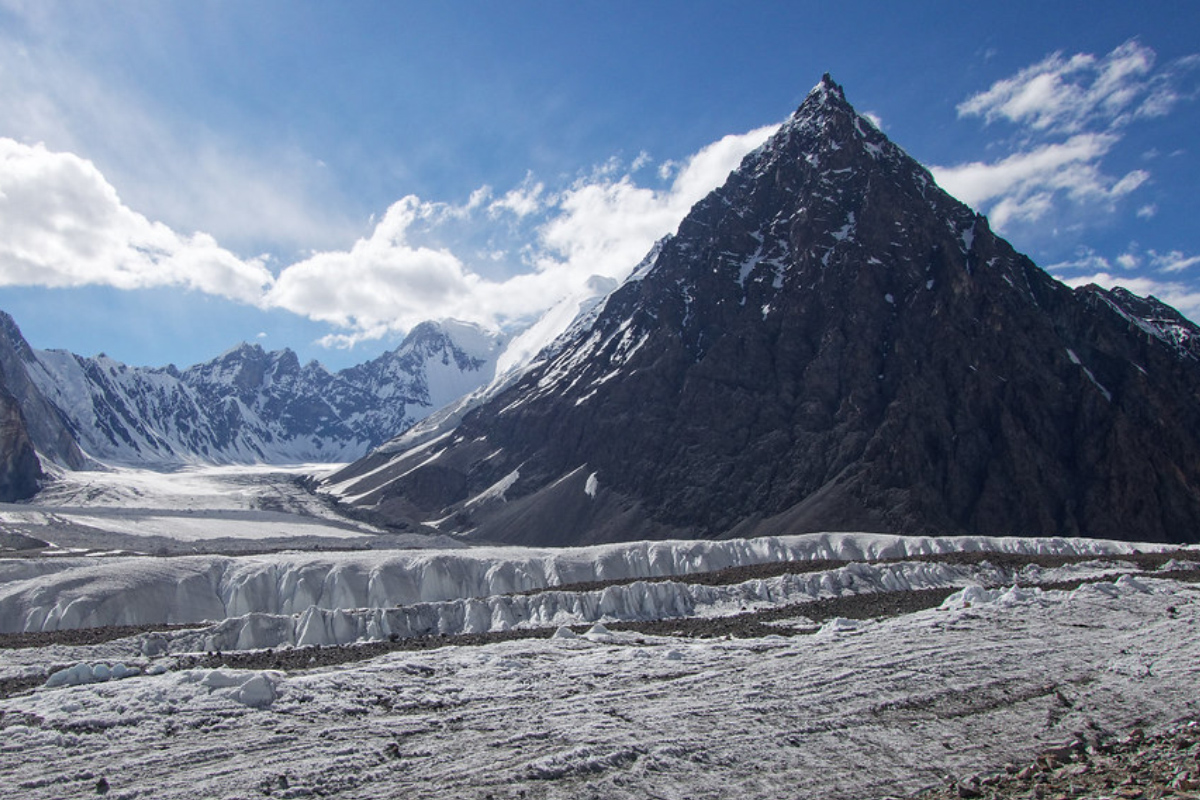
From Arando, the trek to base camp follows the rugged terrain of the Chogolungma Glacier, crossing moraines, rocky sections, and glacial paths surrounded by dramatic peaks rising above 5,000 meters. This approach trek is an expedition highlight in itself, offering solitude, raw mountain scenery, and a deep connection to the Karakoram wilderness.
- Base Camp: 4,360 m
- Camp I: 5,100 m
- Camp II: 5,500 m
- Camp III: 6,250 m
The summit push follows the southeast ridge, a direct and safe line that has been successfully used by numerous expeditions.
Climbing Route and Safety
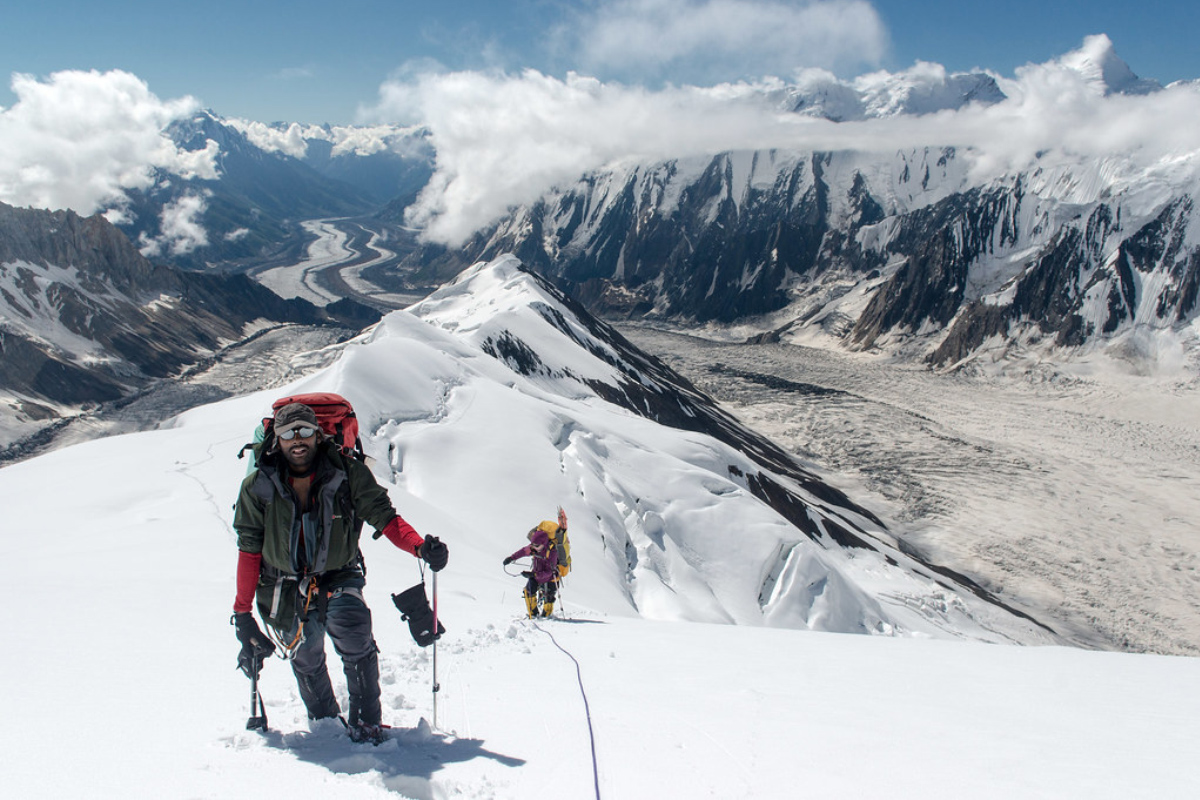
The southeast face of Spantik Peak is considered the safest and most practical route. The climb consists mainly of snow slopes with a few steeper sections that are secured with fixed ropes. Objective dangers are minimal compared to other peaks of similar height, and the route allows steady acclimatization through well-spaced high camps.
Our expeditions emphasize safety, proper acclimatization, and experienced local leadership. The mountain’s moderate technical difficulty makes it accessible to climbers with solid trekking or basic mountaineering backgrounds who are physically fit and well-prepared.
Climbing History
The southeast ridge of Spantik Peak was first explored in 1906 by American climbers Fanny and William Bullock-Workman, who reached an impressive altitude of approximately 6,700 meters. The first successful ascent of Spantik was achieved in 1955 by a German expedition led by Karl, using the same route that is followed today.
Since then, Spantik has seen a high success rate compared to other 7,000-meter peaks, further strengthening its reputation as one of the most achievable high-altitude summits in the Karakoram.
Summit Views
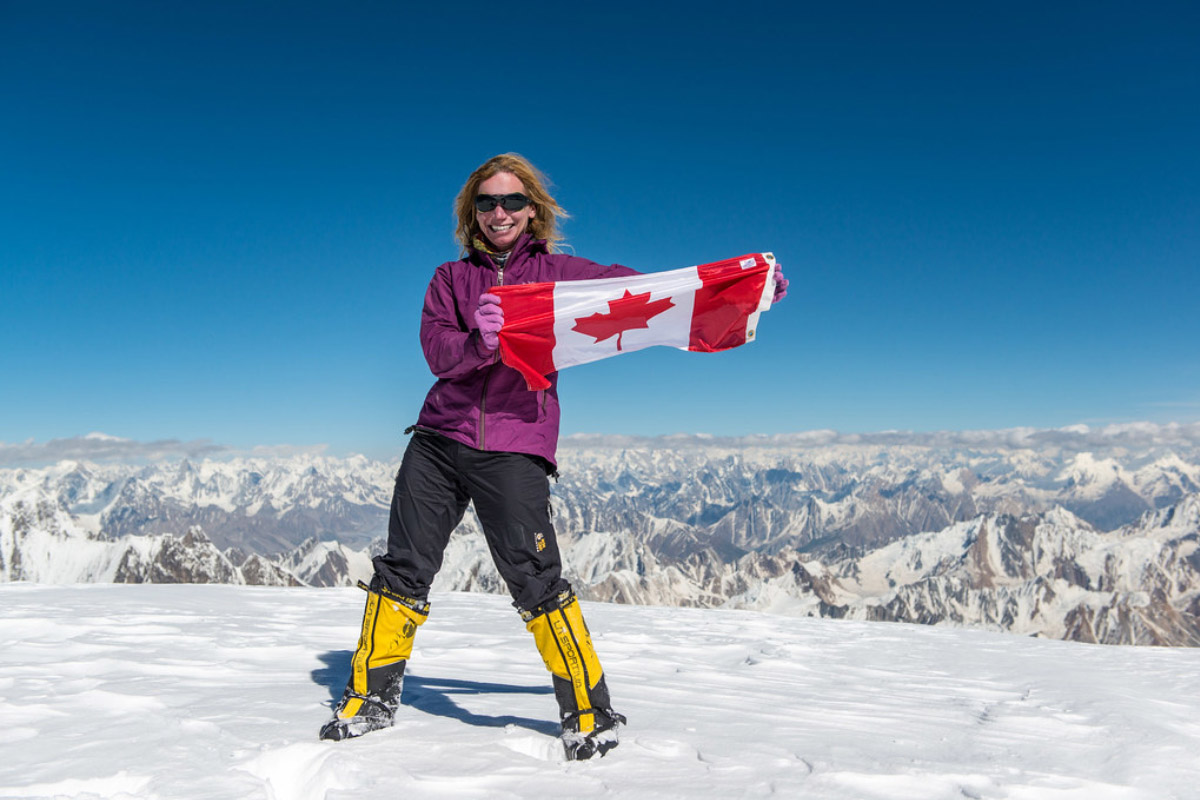
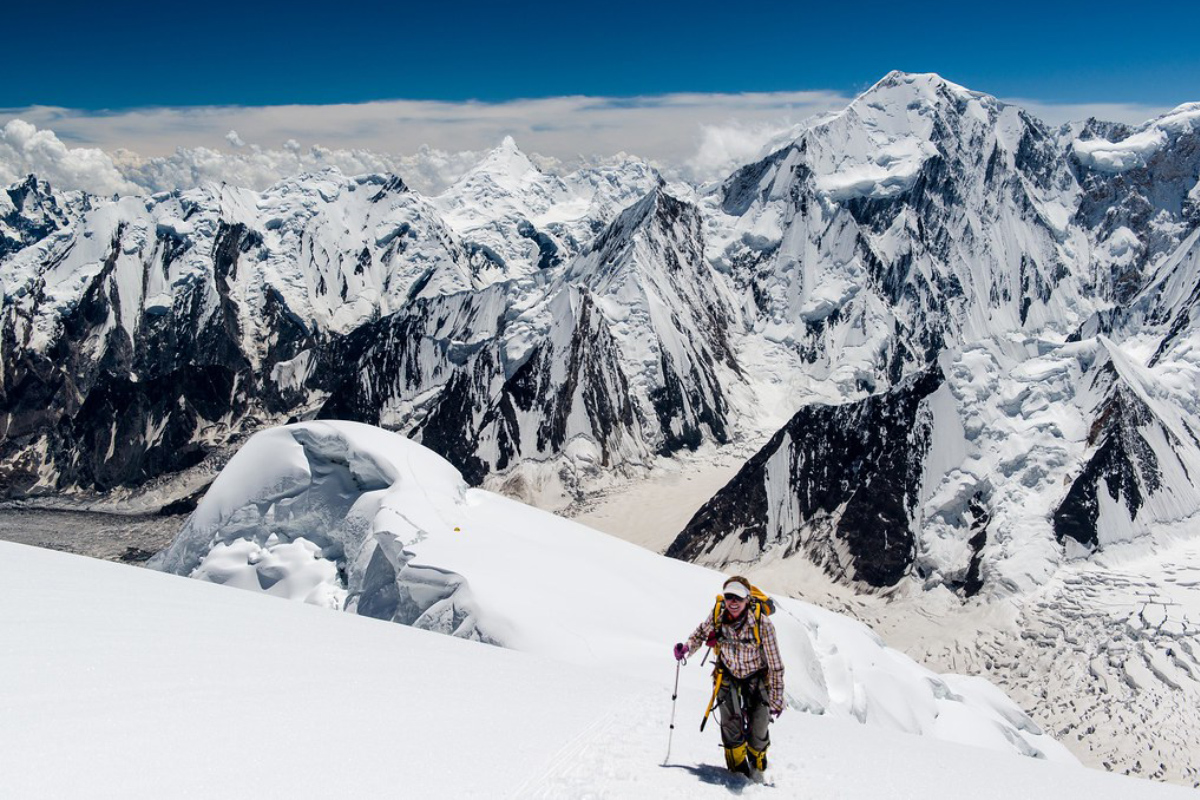
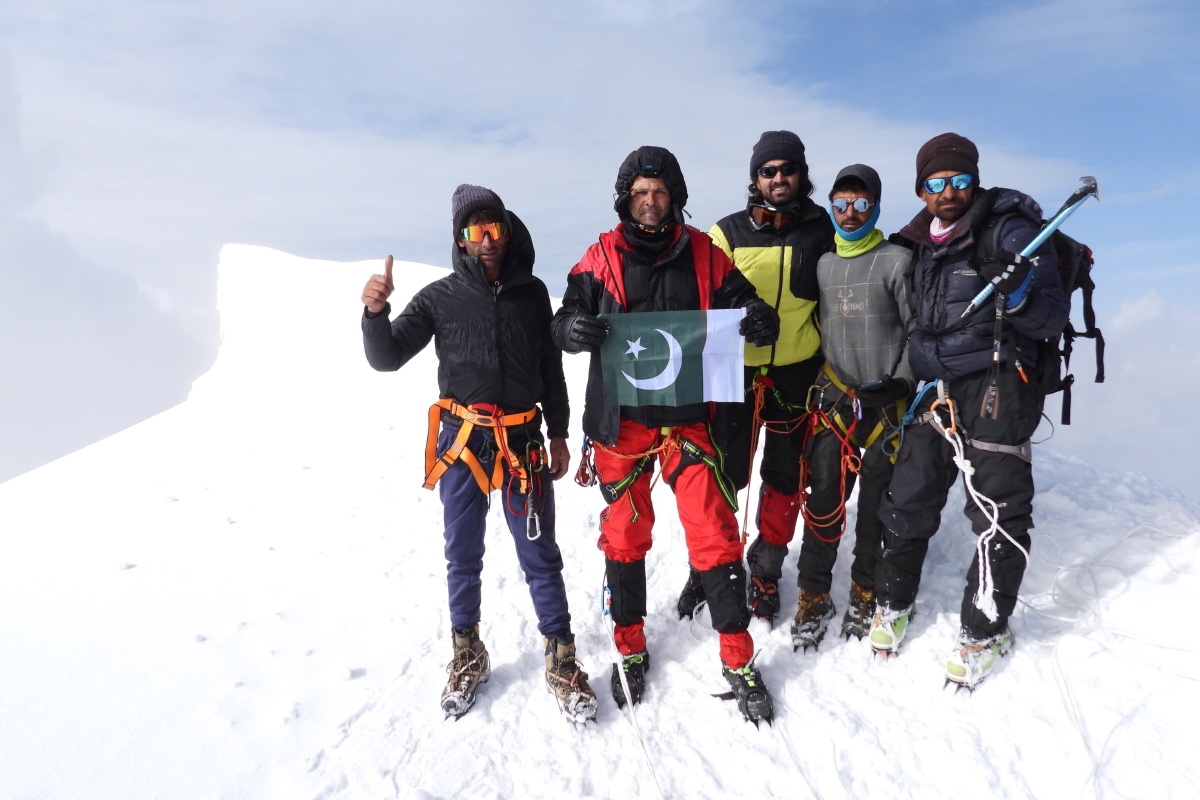
On a clear summit day, Spantik Peak offers one of the most breathtaking 360-degree panoramic views in the Karakoram. From the top, climbers can see an extraordinary lineup of legendary mountains, including:
Rakaposhi, Diran Peak, Malubiting, Ultar Sar, the Battura Group, Haramosh, the Shimshal Range, distant views of K2, and even Nanga Parbat on exceptionally clear days. These views alone make the climb unforgettable.
Who Is This Expedition For?
The Spantik Peak Expedition is suitable for individual climbers and teams from around the world. Men and women with prior high-altitude trekking or mountaineering experience are welcome to join fixed departures or request private expeditions.
You are well-suited for Spantik if you have:
- Summited a 5,000 m or 6,000 m peak such as Island Peak, Aconcagua, Denali, Chimborazo, Alpamayo, Mustagh Ata, or similar
- Completed demanding treks like K2 Base Camp, Gondogoro La, Snow Lake–Hispar La, Everest Base Camp, or equivalent routes
- Maintained good physical fitness and undergone proper pre-expedition training
With the right preparation, Spantik is a realistic and rewarding goal.
Expedition Cost and Options
We offer full-board Spantik Peak Expeditions as well as Base Camp–only services for independent climbers.
Scroll down to see the details.
Optional High Altitude Porter (HAP) / Personal Climbing Guide is available for an additional USD 1,500.
Why Choose Us?
We are a team of passionate mountain professionals and natives of the Karakoram, with unmatched local knowledge of the terrain, weather, and culture. Our guides are among the most experienced in Pakistan’s Karakoram and Himalayan ranges, and our logistics team ensures smooth operations from start to summit.
We take pride in offering affordable, well-organized, and safety-focused expeditions, without compromising on service quality. Our Spantik Peak Expedition is competitively priced and designed to give climbers maximum value, professional guidance, and an authentic Karakoram experience.
We also specialize in tailor-made private expeditions for families, clubs, companies, and charitable groups. Depending on experience levels, climbers are accompanied throughout the journey by highly skilled native guides from the region.
Ready to Climb Spantik Peak?
If climbing above 7,000 meters in the heart of the Karakoram is your next goal, the Spantik Peak Expedition is the perfect choice. Contact us today to discuss dates, training advice, gear lists, logistics, or private expedition planning. Our team is always ready to guide you toward your next great summit.
Itinerary
Day 1: Arrival in Islamabad
Location: Islamabad | Altitude: 540 m
Day one marks the official start of the Spantik Peak Expedition. Upon arrival at Islamabad International Airport, participants will be warmly welcomed by a member of our expedition team and transferred to the hotel.
Our staff will be easily identifiable, holding the company placard at the airport. To ensure a smooth pickup, climbers are required to share their complete flight details at least 3–4 days prior to arrival. From the airport, guests will be escorted to our partner hotel in Islamabad, ideally located near the scenic Margalla Hills, offering a peaceful environment to rest after international travel.
After check-in, participants can relax and recover from their journey. Expedition payments are to be settled upon arrival; however, in the case of late-night arrivals, payment and a detailed expedition briefing will be conducted later in Skardu.
This day is reserved for rest, light orientation, and preparation for the journey ahead, allowing climbers to adjust before moving toward the Karakoram region.
Accommodation: Hotel room on twin-sharing basis
Meals: Breakfast, Lunch, and Dinner included
Day 2: Fly to Skardu
Location: Skardu | Altitude: 540 m – 2,228 m
On the second day of the Spantik Peak Expedition, participants will take an early-morning flight from Islamabad to Skardu, the principal logistical center for trekking and climbing expeditions in the Karakoram Range.
Weather permitting, this scenic flight offers breathtaking aerial views of some of the world’s highest mountain systems, including the Himalaya and Karakoram ranges. On clear days, climbers may witness the majestic Nanga Parbat rising prominently above the surrounding peaks, making this journey a memorable highlight of the expedition.
Upon arrival at Skardu Airport, our local team will receive the group and arrange a comfortable transfer to our partner hotel. After check-in, participants will have time to rest and recover from travel. If arrival is early, there will be an opportunity to explore the local bazaar and nearby areas of Skardu, offering a first glimpse into the culture and landscape of Baltistan.
This day allows climbers to begin adjusting to the higher altitude while final preparations for the expedition continue.
Accommodation: Hotel room on twin-sharing basis
Meals: Breakfast, Lunch, and Dinner included
Day 3: Rest and Preparation day in Skardu
Location: Skardu | Altitude: 2,230 m
Day three of Spantik Peak Expedition is reserved for rest, acclimatization, and final preparations in Skardu, a scenic mountain town situated along the banks of the Indus River and surrounded by towering peaks.
After breakfast, participants will conduct a thorough inspection of their climbing and personal equipment required for the Spantik Peak Expedition. Any missing or unsuitable gear can be purchased or rented locally, ensuring all climbers are fully prepared before heading into the remote Karakoram region.
Once equipment checks are complete, the group will undertake a short acclimatization hike to Kharpocho Fort, also known as the Old Fort, located a short distance above Skardu Bazaar. This gentle hike helps the body adjust to altitude while offering panoramic views of the Indus River, Skardu town, and the surrounding mountain landscape.
The remainder of the day is free for rest, hydration, and mental preparation, allowing climbers to recover and gradually adapt to the increasing altitude.
Accommodation: Hotel room on twin-sharing basis
Meals: Breakfast, Lunch, and Dinner included
Day 4: Drive to Arando Valley
Location: Arando | Altitude: 2,720 m
Early in the morning, the expedition departs from Skardu for Arando Village, the final permanent settlement in the Shigar Valley before approaching Spantik Peak. This journey marks the transition from urban logistics to the remote mountain environment of the Karakoram.
The drive to Arando takes approximately 5–7 hours by jeep, passing through the fertile landscapes of the Shigar Valley. Shortly after leaving Skardu, the route enters this historic valley, renowned as the gateway to some of the world’s highest peaks, including K2. The road follows the Shigar River through green fields and villages before gradually narrowing as the terrain becomes more rugged and mountainous.
Approximately three hours into the journey, the group reaches Chutron Village, famous for its natural hot springs. Here, participants will enjoy a short break for lunch and an opportunity to relax in the hot spring before continuing the drive. From Chutron, the route follows the Basha River on a narrow mountain track, reaching Arando after a further 2–3 hours.
Upon arrival in Arando, the expedition team, including porters, climbing assistants, and kitchen staff, will join the group. Our crew will set up the campsite while participants are welcomed with hot tea and light refreshments. Dinner will be served in the mess tent, followed by an overnight stay at a fully serviced campsite, officially marking the beginning of the trekking phase toward Spantik Peak.
Accommodation: Tents on twin-sharing basis
Meals: Breakfast, Lunch, and Dinner included
Day 5: Trek from Arando to Chogo Brangsa
Location: Chogo Brangsa | Altitude: 3,400 m
Day five marks the start of the trekking phase of the Spantik Peak Expedition. The trek begins from Arando Village, following a scenic trail that winds through green pastures alongside the glacier, gradually leading deeper into the Basha Valley.
The route passes through lush summer grazing lands traditionally used by local communities. Chogo Brangsa, the day’s destination, is a seasonal pasture whose name translates to “Great Shelter,” reflecting its historical role as a resting place for shepherds and travelers in the region.
The trek to Chogo Brangsa takes approximately 6–8 hours, covering a distance of around 14 kilometers with an elevation gain of nearly 900 meters. Along the way, participants may encounter local shepherds and small-scale miners, offering a glimpse into the traditional mountain livelihoods of the area.
Upon arrival, the campsite will be established in an open alpine setting surrounded by dramatic mountain scenery. The remainder of the day is dedicated to rest, hydration, and acclimatization in preparation for the higher altitudes ahead.
Accommodation: Tents on twin-sharing basis
Meals: Breakfast, Lunch, and Dinner included
Day 6: Trek from Chogo Brangsa to Balocho Camp
Location: Balocho | Altitude: 3,800 m
On the second day of trekking toward Spantik Peak, the group begins early to take advantage of stable morning conditions. The route follows the edge of the glacier, combining established mountain trails with limited sections of glacial terrain.
While a few short stretches require careful movement due to potential stonefall, the majority of the trek remains on a well-defined path running parallel to the glacier, leading steadily toward Balocho Camp. The surrounding landscape becomes increasingly alpine as the expedition moves closer to the high mountain environment.
The trek from Chogo Brangsa to Balocho typically takes 5–7 hours, covering approximately 13–14 kilometers with an elevation gain of around 700 meters. Upon reaching camp, participants are rewarded with their first clear views of Spantik Peak, rising impressively above the surrounding ridgelines.
Balocho Camp serves as an important overnight stop for rest and acclimatization before advancing further toward base camp.
Accommodation: Tents on twin-sharing basis
Meals: Breakfast, Lunch, and Dinner included
Day 7: Trek to Spantik Peak base Camp
Location: Spantik Base Camp | Altitude: 4,340 m
Day seven is a significant milestone of the Spantik Peak Expedition as the team reaches its primary destination—Spantik Base Camp. The day’s trek is conducted entirely on glacial terrain, offering a true introduction to the high-altitude alpine environment of the Karakoram.
Departing from Balocho Camp, the route follows the Chogolungma Glacier, gradually ascending toward the base of Spantik Peak. The glacier walk is steady and scenic, surrounded by dramatic ice formations and towering mountain walls. The trek takes approximately 5–6 hours, covering a distance of around 13–14 kilometers with an elevation gain of nearly 500 meters.
Upon arrival at Spantik Base Camp, the expedition team will establish a fully serviced campsite, which will serve as the main operational base for the climbing phase over the next two weeks. The remainder of the day is reserved for rest, hydration, and acclimatization, allowing climbers to adapt to the altitude before beginning rotations on the mountain.
Accommodation: Tents on twin-sharing basis
Meals: Breakfast, Lunch, and Dinner included
Day 8-23: Climbing and Acclimatization days
Location: Spantik Peak (7,126 m) | Altitude Range: 4,340 m – 7,126 m
Days eight through twenty-three are dedicated to the climbing and acclimatization phase of the Spantik Peak Expedition. During this period, climbers will follow a carefully planned rotation strategy to ensure proper acclimatization, safety, and optimal chances of a successful summit.
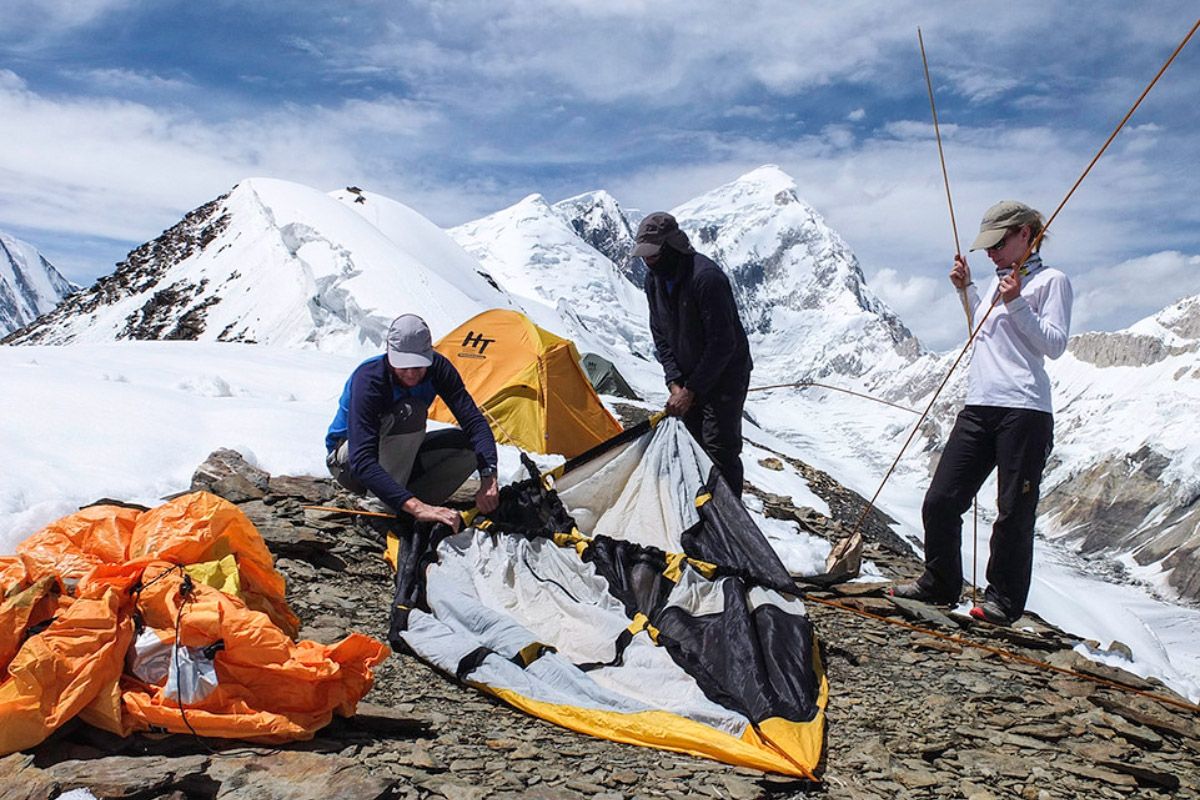
The expedition team will establish a series of high camps above base camp, progressively moving equipment, supplies, and personal gear higher on the mountain. Climbers will ascend and descend between camps in stages, allowing their bodies to adapt to the increasing altitude while building strength and confidence on the route.
Under the guidance of experienced climbing leaders and high-altitude staff, participants will receive ongoing support with route fixing, rope management, and safety procedures. Weather conditions will be closely monitored throughout this phase, and summit attempts will be scheduled during the most favorable weather window.
One of these days will be reserved for the summit push, starting in the early hours from the highest camp. After reaching the summit of Spantik Peak (6,702 meters), climbers will descend safely back to lower camps and eventually return to base camp.
Additional days within this period are allocated for rest, recovery, and contingency, allowing flexibility in case of unfavorable weather or other high-altitude challenges. This structured approach significantly enhances acclimatization and maximizes the overall success and safety of the expedition.
Accommodation: Tents at Base Camp and High Camps (twin sharing where applicable)
Meals: Breakfast, Lunch, and Dinner included,
Day 24: Trek back to Chogo Brangsa
Location: Chogo Brangsa | Altitude: 3,800 m
As the Spantik Peak Expedition begins its return journey, climbers will descend from Spantik Base Camp under the guidance of the Chogori Adventure team and their support staff. Today’s trek leads back to Balocho Camp for an overnight stay, retracing the route through alpine landscapes and glacial trails.
The following day, the trek will continue toward Arando Village, gradually moving from high-altitude camps into the greener pastures and valleys of the Shigar region. This descent allows climbers to reflect on their achievements while safely returning to lower elevations.
Accommodation: Tents on twin-sharing basis
Meals: Breakfast, Lunch, and Dinner included,
Day 25: Trek to Arando and Drive to Skardu
Location: Arando | Altitude: 2,230 m
On this day, the expedition continues its descent as climbers trek from Chogo Brangsa back to Arando Village. Upon arrival, the team will transfer by jeep toward Skardu, retracing the scenic route through the Shigar Valley along the Basha River.
A stop will be made at the natural hot springs in Chutron Village, providing a perfect opportunity for lunch and a refreshing soak after the high-altitude trekking. Following this break, the journey resumes to Skardu, where participants will stay overnight at the Chogori Adventures partner hotel. This marks the conclusion of the trekking and high-mountain phase of the expedition, allowing climbers to rest and recover in comfort.
Accommodation: Hotel room on twin-sharing basis
Meals: Breakfast, Lunch, and Dinner included
Day 26: Contingency Day in Skardy
Location: Skardu | Altitude: 2,230 m
This day is reserved as a contingency day in Skardu to accommodate any unforeseen delays, such as flight cancellations or schedule changes. This buffer day ensures a stress-free conclusion to the Spantik Peak Expedition, providing climbers with additional time to rest, organize luggage, and make any necessary arrangements before departure.
Participants will stay overnight at the Chogori Adventures partner hotel, enjoying a comfortable environment and meals while awaiting onward travel.
Accommodation: Hotel room on twin-sharing basis
Meals: Breakfast, Lunch, and Dinner included
Day 27: Fly back to Islamabad
Location: Islamabad | Altitude: 540 m
On this day of the Spantik Peak Expedition, participants will take a flight from Skardu back to Islamabad. This marks the conclusion of the high-altitude adventure, offering climbers the opportunity to reflect on their achievements while returning to the capital city.
Upon arrival, participants will be transferred to a partner hotel in Islamabad for overnight stay and rest before onward travel or departure from Pakistan.
Accommodation: Hotel room on twin-sharing basis
Meals: Breakfast, Lunch, and Dinner included
Day 28: Fly to Home Country
On the final day of the Spantik Peak Expedition, participants will conclude their journey and depart from Islamabad International Airport. This is the time to bid farewell to the team, fellow climbers, and support staff, taking with you unforgettable memories of the Karakoram, the breathtaking Spantik Peak, and the rich culture of northern Pakistan.
Our staff will assist with airport transfers, ensuring a smooth and comfortable departure for each participant.
Highlights
- A must-do 7,000m mountain expedition in the Karakoram
- A spectacular trek through Chogolongma Glacier and Spantik Base Camp
- Explore the remote Basha Valley of Shigar and Arindo region
- Affordable opportunity to climb an ideal 7,000m peak in Pakistan
- Sightseeing in Skardu and Shigar Valley
- Leading native adventure company of the Karakoram
- Experienced Pakistani high-altitude team with multiple summit ascents
- Panoramic views of surrounding 8,000m peaks from summit
- Both guided and alpine-style expedition options available
- Full board and base camp–only packages available
- Additional Sherpa support available on request
- Fixed departures suitable for budget climbers
- Private and group expedition departures available
Included/Excluded
Lodging at base camp (single supplement)
Full base camp with dinning tent, bathroom, showers & solar charge
All internal/domestic transport
All domestic flights
25kgs personal baggage
All meals during trek and at base camp (B,L,D)
Group emergency equipment/satellite phone service with fixed calling charge
Two nights stay in Islamabad hotel on arrival and two on return (bed & breakfast only)
Staff insurance (guide, cook, kitchen staff, assistant(s) & porters etc)
Experienced cook and Kitchen staff
Porters for all expedition supplies
Solar power at base camp
Government climbing permit fees and paperwork
EPI gases
Ropes, snow bars, ice screws,
Hgh altitude porters between 2 members
High altitude tent
Satellite phone for emergencies
Insurance and emergency rescue
Summit bonus, Tips and high altitude Food
Personal Gear, equipment and apparels
Supplementary Oxygen
Early Windup Return Costs (e.g. early return from trek regardless of reason)
Costs due to Force Majure (e.g. earthquake, landslide, floods, etc)
Miscellaneous expenses not mentioned in services included
Anything else not mentioned in services included
Things To know
Why Register Early for Spantik Peak Expedition?
- Team Formation
Early registration helps us build a strong and experienced climbing team. We carefully review all applications to ensure participant safety and proper team compatibility for the Spantik Peak Expedition. - Expedition Logistics
The Spantik Peak Expedition requires extensive planning and logistics, including arranging guides, high-altitude porters, transport, food supplies, and climbing equipment well in advance. - Climbing Permit Process
According to Pakistani tourism regulations, climbing permit applications and required documents must be submitted several weeks before the expedition departure date. - Domestic Flight Reservations
Flights to Skardu are limited during peak climbing season and seats sell out quickly. Early booking helps secure domestic flights and avoid travel delays. - Early Bird Prices
Expedition costs may increase closer to the season due to rising hotel, transport, and operational expenses. Early registration secures the best available price for your expedition. - Lower Deposit Options
Participants who register early can secure their place with a lower deposit amount compared to late bookings.
- 8 months before departure: 35% deposit
- 6 months before departure: 40% deposit
- 5 months before departure: 50% deposit
- 4 months before departure: Full payment required
Refund Policy
- Deposits are non-refundable as they are used for permits, logistics, staff arrangements, equipment procurement, and expedition preparation.
- Remaining balance must be cleared 120 days before arrival unless stated otherwise.
- No refunds are available for unused services, expedition delays, weather conditions, route closures, or expedition cancellation beyond company control.
- Participants leaving the expedition voluntarily are not eligible for refunds.
- Travel and trip cancellation insurance is highly recommended for all climbers.
Currency
- International participants are charged in US Dollars (USD).
Important Notes
- Deposit payments should only be made after registration approval and confirmation.
- The Spantik Peak Expedition operates in remote mountain conditions where flexibility and understanding are essential.
- Private and customized expedition options are available upon request.
FAQs
Where is Spantik Peak located?
Spantik Peak is located in the Karakoram Range of Gilgit-Baltistan, Pakistan, between Shigar Valley and Nagar Valley. The mountain lies south of the Hispar Glacier and rises above the Chogolungma Glacier in a remote and pristine alpine region.
What is the height of Spantik Peak?
Spantik Peak stands at an altitude of 7,027 meters (23,054 feet), making it one of the most accessible 7,000-meter peaks in the Karakoram.
Is Spantik Peak suitable for beginners?
Spantik Peak is considered an intermediate-level mountaineering peak. While it is one of the less technical 7,000-meter mountains, climbers should have prior experience at 5,000–6,000 meters or have completed challenging high-altitude treks. With proper training and fitness, Spantik is an excellent progression peak toward 8,000-meter expeditions.
Why is Spantik Peak called a training peak for 8000m mountains?
Spantik Peak is often referred to as a training ground for 8000-meter peaks because it offers high-altitude exposure, glacier travel, snow and ice climbing, and expedition-style logistics without extreme technical difficulty. Many climbers attempt Spantik before moving on to major Himalayan or Karakoram giants.
What is the technical difficulty of Spantik Peak?
Spantik Peak is classified as a Grade II snow and ice climb. The route mainly involves snow slopes with a few steeper sections where fixed ropes are used. No advanced technical climbing skills are required, but basic mountaineering knowledge is essential
Which route is used to climb Spantik Peak?
The southeast ridge / southeast face is the standard and safest route for climbing Spantik Peak. This route offers a straightforward ascent with relatively low objective risks and good acclimatization opportunities.
How long does the Spantik Peak Expedition take?
A full Spantik Peak Expedition usually takes 28 days, including travel, approach trek, acclimatization, summit attempts, and contingency days for weather.
Where does the expedition start?
The expedition starts from Skardu, followed by a jeep drive to Arando Village in Shigar Valley. From Arando, the trek to Spantik Base Camp begins via the Chogolungma Glacier.
What is the altitude of Spantik Base Camp?
Spantik Peak Base Camp is established at approximately 4,360 meters above sea level.
How many camps are set on Spantik Peak?
Typically, three high camps are established: Camp I: 5,100 m Camp II: 5,500 m Camp III: 6,250 m These camps allow proper acclimatization and a safe summit push.
What is the best season to climb Spantik Peak?
The best climbing season for Spantik Peak is June to August, when weather conditions are generally more stable and snow conditions are suitable for ascent.
What are the weather conditions like on Spantik Peak?
Weather in the Karakoram can be unpredictable. Climbers can expect cold temperatures, snowfall, and strong winds at higher altitudes. Proper acclimatization and flexible summit planning are essential for success.
What experience is required to join the expedition?
Participants should have experience in: High-altitude trekking (K2 Base Camp, Gondogoro La, Snow Lake–Hispar La, Everest Base Camp, etc.) Or prior climbs of 5,000 m or 6,000 m peaks Good physical fitness and basic snow and ice climbing skills are required.
Do I need previous 7,000m experience for Spantik Peak Expedition?
Yes, previous high-altitude climbing experience is required for the Spantik Peak Expedition. This is a serious 7,000m mountaineering objective that demands proven experience in technical climbing and extreme altitude conditions.
Climbers should ideally have prior experience above 6,000m–7,000m peaks, including the use of crampons, ropes, ice axe, and glacier travel techniques. Familiarity with high-altitude expedition environments is essential for safety and success.
The Spantik Peak Expedition is not suitable for beginners, as it requires strong physical fitness, technical climbing skills, and prior high-altitude expedition experience.
Are fixed departures available?
Yes, fixed departures are available for Spantik Peak Expeditions. Climbers can also request private or customized expeditions based on preferred dates and group size.
Can solo climbers join the expedition?
Yes, solo climbers are welcome. We organize teams accordingly or offer private expeditions for individuals seeking personalized support
Is a personal climbing guide or HAP available?
Yes, climbers can hire a High Altitude Porter (HAP) or personal climbing guide for additional support at an extra cost.
Is travel insurance mandatory?
Yes, comprehensive travel and mountaineering insurance covering high-altitude climbing and emergency evacuation is mandatory for all participants.
What are the chances of summiting Spantik Peak?
Spantik Peak has a high summit success rate compared to other 7,000-meter peaks, provided climbers are well-prepared, acclimatized, and weather conditions are favorable.
What can be seen from the summit?
The summit offers a stunning 360-degree panoramic view of major Karakoram peaks including Rakaposhi, Diran, Ultar, Malubiting, the Battura Group, Haramosh, Shimshal Mountains, K2, and Nanga Parbat in clear conditions.
Is Spantik Peak a low-cost expedition?
Compared to other 7,000-meter peaks in the Karakoram, Spantik Peak is relatively affordable, making it one of the best value high-altitude expeditions in the region.
Can the expedition be customized?
Yes, we specialize in tailor-made Spantik Peak Expeditions for private groups and companies.
How can I book the Spantik Peak Expedition?
You can book by contacting us directly through our website. Our team will assist with dates, preparation guidance, equipment lists, and all expedition logistics
Reviews
0/5
Not Rated
Based on
0 review
Excellent
0
Very Good
0
Average
0
Poor
0
Terrible
0
No Review
from
$6,050
You might also like
from
$6,050